
Queue & seats · word
列
れつ
retsu
queue / line
Ask where to join before standing beside a door or machine.
ラーメン店で使える日本語
Find the words you need at the counter. Learn a few more in a quick five-question round.
入店から注文、食後のお礼まで。日本語、ローマ字、英訳に、使う場面と言葉の意味を添えました。
Saved phrases stay in this browser.
Start with 10 essentials, or search all 100 phrases.
100 of 100 phrases.
Listen uses your device’s Japanese voice. No microphone or recording is used. Voice availability and sound vary by device.
Original phrase sections
Show a phrase immediately, or open its notes.
Read the menu. Catch the key word.
96 words and 24 quick lines, with readings, meanings and shop context.
120 words and quick lines.
れつ
retsu
queue / line
Ask where to join before standing beside a door or machine.
さいこうび
saikōbi
end of the queue
A sign marked 最後尾 points to the back of the line.
まちじかん
machi-jikan
waiting time
An estimate can change as service continues.
まんせき
manseki
all seats occupied
Wait for staff to guide you; an opening is not a reservation.
くうせき
kūseki
vacant seat
A visibly empty seat is not automatically available to take.
あいせき
aiseki
sharing a table with other guests
This concerns seating, not splitting a dish.
kauntā
counter seating
Follow any seat assignment or staff direction.
tēburu
table
A table for a group may not be available.
しょっけん
shokken
meal ticket
This records the meal you bought; it is not necessarily a receipt.
けんばいき
kenbaiki
ticket machine
Buttons, screens and payment methods vary.
こうにゅう
kōnyū
purchase
You may see this word on a confirmation button.
うりきれ
urikire
sold out
Signs may shorten this to 売切.
へんきゃく
henkyaku
return / refund
On a machine this may return inserted money; read the label and ask if unsure.
おつり
otsuri
change from a payment
Collect both your change and your meal ticket.
りょうがえ
ryōgae
changing money into smaller denominations
Here it means smaller notes or coins, not a currency-exchange service.
せんえんさつ
sen-en-satsu
1,000-yen banknote
Check which notes the machine accepts.
めん
men
noodles
A menu can specify noodle type, amount or firmness separately.
ほそめん
hosomen
thin noodles
Thickness does not tell you the portion size.
ふとめん
futomen
thick noodles
Thick noodles are not automatically an extra-large portion.
ちぢれめん
chijiremen
wavy noodles
This describes shape rather than firmness.
ストレートめん
sutorēto-men
straight noodles
A shape description, not a request for extra noodles.
かため
katame
firmer noodles
Use this only if a firmness choice is offered, and before cooking.
ふつう
futsū
regular / the standard option
The question tells you whether this refers to firmness, quantity or something else.
やわらかめ
yawarakame
softer noodles
Some menus write やわらかめ or やわめ.
sūpu
soup in the bowl
Its appearance does not reveal all its ingredients.
しょうゆ
shōyu
soy sauce
In a ramen name it usually describes the seasoning, not the entire stock.
しお
shio
salt
Shio ramen can still use animal or seafood ingredients.
みそ
miso
miso paste
Miso-seasoned ramen does not imply a meat-free broth.
とんこつ
tonkotsu
pork bones / pork-bone broth
Do not confuse tonkotsu with tonkatsu, a breaded pork cutlet.
とりぱいたん
tori paitan
cloudy chicken broth
White-looking soup is not necessarily made with milk.
にぼし
niboshi
small dried fish used for stock
A key fish-stock word to recognize on menus.
dashi
stock used as a flavor base
The word alone does not identify the ingredients.
chāshū
chashu meat topping
Often pork; other meats and preparations exist. Check the menu.
あじたま
ajitama
seasoned egg
Short for 味付け玉子; preparation and doneness vary.
menma
seasoned bamboo shoots
Seasonings are separate from the visible bamboo shoots.
のり
nori
nori seaweed
A topping name does not describe the rest of the bowl.
negi
green onion / leek
The variety and cut depend on the shop.
moyashi
bean sprouts
A vegetable topping does not make the whole bowl vegetarian.
kikurage
wood-ear mushroom
Often sliced thinly as a topping.
にんにく
ninniku
garlic
Omitting added garlic does not establish that the broth or kitchen is garlic-free.
なみもり
namimori
regular serving
Regular amounts differ between shops.
おおもり
ōmori
large serving
Usually ordered as a larger initial portion; it is not the same as kaedama.
こもり
komori
small serving
A small option may not be offered. 小 on a Jiro-style menu can still be substantial.
すくなめ
sukuname
less than the usual amount
Say what you want less of; a lower price is not implied.
まし
mashi
extra / increased amount
At a topping call, name the topping. Amounts and charges vary.
ましまし
mashimashi
extra-extra / a larger increase
This is not a fixed quantity. Check the shop’s options first.
かえだま
kaedama
extra noodles for the broth you have left
Availability and the ordering method vary. It is not a fresh bowl of soup.
はんぶん
hanbun
half
Ask before preparation and specify noodles or the item you mean.
assari
light, clean-tasting
A flavor impression, not a promise of low salt or low calories.
kotteri
rich, heavy-tasting
It does not specify every ingredient or a nutrition value.
こいめ
koime
stronger seasoning / flavor
Different from requesting chili heat.
うすめ
usume
lighter seasoning / flavor
Ask whether the shop offers an adjustment.
あぶら
abura
fat
At some topping calls アブラ means added back fat. Oil is also pronounced abura.
からい
karai
spicy / chili-hot
In this ramen context, this describes heat from spice.
からめ
karame
on the spicier side
Ordinary 辛め concerns spice. At a Jiro-style call, カラメ can mean stronger seasoning.
からめ
karame
stronger seasoning at a Jiro-style call
In this context it is not a request for chili. Ask which options this shop offers.
rāmen
ramen
The name alone does not tell you all the ingredients.
つけめん
tsukemen
noodles served with separate dipping soup
Dip the noodles in the soup; follow any shop-specific guidance.
mazesoba
noodles mixed with sauce and toppings
Usually served without a full bowl of broth. Recipes vary.
あぶらそば
abura soba
noodles with oil and tare instead of a bowl of soup
Similar styles may overlap with mazesoba; the shop’s name and recipe matter.
いえけい
iekei
Iekei ramen style
Read いえけい, iekei. A style name does not identify one chain or guarantee identical ingredients.
じろうけい
Jirō-kei
Jiro-style ramen
A style label does not mean an official Ramen Jiro branch or a universal ordering script.
ひやし
hiyashi
chilled / served cold
Ask what is chilled; seasonal dishes and serving methods differ.
スープわり
sūpu-wari
broth to dilute dipping soup
Ask whether it is offered. It is not a noodle refill.
みず
mizu
water
Staff may say お水, omizu. Water may be self-service.
はし
hashi
chopsticks
Use お箸, ohashi, in a polite request.
renge
ramen soup spoon
A small request can help if you cannot find one.
とりざら
torizara
small side plate
Do not assume it is available or that sharing a bowl is permitted.
かみエプロン
kami epuron
paper apron
Available at some shops; ask instead of reaching behind the counter.
tisshu
tissues
A useful word for the counter or self-service area.
おてあらい
otearai
restroom
A shop may not have a customer restroom.
にもつ
nimotsu
bags / belongings
Keep aisles clear and ask where your bag can go.
かいけい
kaikei
bill / payment
Ask for お会計 at a pay-after-eating shop; avoid paying twice for a meal ticket.
げんきん
genkin
cash
現金のみ means cash only.
kādo
card
Ask which payment cards are accepted; a card symbol is not a universal guarantee.
でんしマネー
denshi manē
electronic money / e-money
Supported systems and availability differ by shop and machine.
りょうしゅうしょ
ryōshūsho
formal receipt
You may be asked for the name to put on it; requirements vary.
reshīto
itemized sales receipt
At a machine, printing a receipt may be a separate step.
ぜいこみ
zeikomi
tax included
This describes the displayed price, not whether extras are included.
ついかりょうきん
tsuika ryōkin
extra charge
Check before adding noodles or toppings.
おこのみ
okonomi
your preference
Staff may be asking about offered noodle or seasoning options.
kochira
this / here / this way
The meaning depends on what staff point to.
achira
over there / that way
Look for the place staff indicate.
dōzo
please / go ahead
Often an invitation to take something or proceed, depending on context.
しょうしょう
shōshō
a moment / a little
Often part of a polite request to wait briefly.
おまちください
omachi kudasai
please wait
Wait for the next instruction instead of guessing the next step.
おきまり
okimari
decided / settled
ご注文はお決まりですか asks whether you have chosen your order.
いじょう
ijō
that is all / the above
In 以上でよろしいですか, staff are checking whether your order is complete.
げんざいりょう
genzairyō
ingredients / raw materials
Ask about the whole dish, including stock, sauce, noodles and toppings.
こむぎ
komugi
wheat
Knowing the word does not establish whether a dish is suitable for you.
たまご
tamago
egg
An egg topping is only one possible part of the dish.
にゅう
nyū
milk, as a label term
You may also see 乳成分. Appearance is not a reliable ingredient check.
だいず
daizu
soybean
Ingredients can appear in seasonings as well as visible toppings.
goma
sesame
Ask staff to check the actual dish and its preparation.
rādo
lard
Pork fat can be present even when no pork topping is visible.
ぎょかい
gyokai
fish and shellfish / seafood
This broad word does not identify every species or ingredient.
Saikōbi wa doko desu ka?
Where is the end of the queue?
Look for signs first, then ask if the end is unclear.
Machi-jikan wa dono kurai desu ka?
How long is the wait?
The answer is an estimate, not a guaranteed seating time.
Futari issho ni suwaremasu ka?
Can the two of us sit together?
Staff may offer separate seats or ask you to wait.
Kochira de mateba ii desu ka?
Should I wait here?
Point clearly and follow the staff’s direction.
Kono osatsu wa tsukaemasu ka?
Can I use this banknote?
Accepted notes depend on the machine.
Shokken ga dete kimasen.
My meal ticket has not come out.
Ask for help before paying again.
Otsuri ga dete kimasen.
My change has not come out.
Check for a change-return button, then ask staff.
Kono botan de atte imasu ka?
Is this the right button?
Point to the button you mean.
Men no ryō wa dono kurai desu ka?
How big is the noodle portion?
Portion names and amounts vary by shop.
Men o hanbun ni dekimasu ka?
Could you make it with half the noodles?
Ask before cooking. Availability and price are up to the shop.
Dono kurai karai desu ka?
How spicy is it?
This asks about chili heat, not Jiro-style カラメ seasoning.
Toppingu wa betsuryōkin desu ka?
Do the toppings cost extra?
Confirm the particular topping before ordering.
Osusume no tabekata wa arimasu ka?
How do you recommend eating this?
Useful when a serving method is unfamiliar.
Sūpu-wari wa arimasu ka?
Do you offer broth to dilute the dipping soup?
Ask after tsukemen; it is not a request for extra noodles.
Renge o itadakemasu ka?
Could I have a soup spoon?
Staff may point you to a self-service area.
Torizara o itadakemasu ka?
Could I have a small plate?
This does not establish that sharing a bowl is allowed.
Nimotsu wa doko ni okeba ii desu ka?
Where can I put my bag?
Keep the entrance and aisle clear.
Betsubetsu ni shiharaemasu ka?
Can we pay separately?
Some shops cannot split a bill; ask before paying.
Gōkei wa ikura desu ka?
How much is it altogether?
Ask about the actual order, including any extras.
Kore wa zeikomi desu ka?
Does this price include tax?
Point to the displayed price you mean.
Mō sukoshi kangaete mo ii desu ka?
Could I have a little more time to decide?
A polite request when you have not chosen yet.
Chūmon o kakunin shite mo ii desu ka?
Could I check my order with you?
Use this to clarify a misunderstanding before preparation.
Kore ni wa nani ga haitte imasu ka?
What is in this?
A general answer may not cover every component or shared equipment.
Genzairyō o kakunin shite itadakemasu ka?
Could you check the ingredients for me?
Explain your actual needs separately. An ingredient check is not a safety guarantee.
Ingredient names help you ask questions; they do not establish that a dish is suitable for a dietary need. Check the actual dish with staff.
One bowl. A few words. Your next small win.
Try five questions, hear a useful word, then practice it in a conversation.

Each topic mixes words, useful replies and one thing to notice at a ramen shop.
Spot the queue, ask before taking a seat, and keep your group together when possible.
A meal ticket, your change and a receipt can come from different places. Follow this shop’s sequence.
Thickness, shape, firmness and quantity are different choices. A shop may offer only some of them.
Shoyu, shio and miso name seasonings; tonkotsu names a pork-bone broth. Names do not list every ingredient.
Learn the menu words before asking for an extra. What is included, optional or removable varies.
A larger serving starts in the bowl. Kaedama adds noodles to the broth you have left, where offered.
Richness, seasoning strength, oil and chili heat are separate. Say which one you mean.
Learn how a bowl is served as well as what it is called. Ask how to eat an unfamiliar style.
Find water and utensils, ask where to put your bag, and follow the shop’s setup.
Check the payment method before ordering. If a meal ticket is already paid for, check whether any extras remain.
You do not need to catch every word. Recognize the question, then repeat or slow things down when needed.
Use the names you need and ask staff to check. This short word list is not a complete ingredient or allergy checklist.
Your answers and paused round stay in this browser. Switching devices does not carry them over. Private browsing or clearing site data can remove them.
Start with your situation. Open a short exchange, listen to what staff might say, then choose the reply you need. These are teaching examples, not exact scripts used by every shop.
Example seating exchange. Ticket timing and group seating depend on the shop.
何名様ですか?
Nanmei-sama desu ka?
How many people?
二人です。
Futari desu.
There are two of us.
Phrase 3 & usage notes →列はどこですか?
Retsu wa doko desu ka?
Where is the queue?
Phrase 27 & usage notes →こちらにお並びください。
Kochira ni onarabi kudasai.
Please queue here.
別々のお席でもよろしいですか?
Betsubetsu no oseki demo yoroshii desu ka?
Would separate seats be okay?
別々の席でも大丈夫です。
Betsubetsu no seki demo daijōbu desu.
Separate seats are fine.
Phrase 41 & usage notes →少々お待ちください。
Shōshō omachi kudasai.
Please wait a moment.
Wait for the staff to guide you; do not sit just because a seat looks empty.
Related phrase 29 →先に食券を買ってください。
Saki ni shokken o katte kudasai.
Please buy a meal ticket first.
This is a direction to buy first at this shop, not a universal queue rule.
Related phrase 28 →Illustrative machine exchange. Payment order, touchscreen/button layout and ticket collection vary.
券売機の使い方を教えてください。
Kenbaiki no tsukaikata o oshiete kudasai.
Please show me how to use the ticket machine.
Phrase 30 & usage notes →メニューを選んで、食券を買ってください。
Menyū o erande, shokken o katte kudasai.
Please choose a menu item and buy its meal ticket.
食券はこちらでいいですか?
Shokken wa kochira de ii desu ka?
Should I hand in my meal ticket here?
Phrase 34 & usage notes →はい、食券をお預かりします。
Hai, shokken o oazukari shimasu.
Yes, I will take your meal ticket.
売り切れです。
Urikire desu.
It is sold out.
Choose another item; do not keep pressing the unavailable button.
Related phrase 32 →現金のみです。
Genkin nomi desu.
Cash only.
Check your cash before ordering. Nomi means only.
Related phrase 53 →お釣りをお取りください。
Otsuri o otori kudasai.
Please take your change.
Look for a separate change return. Do not leave your ticket behind.
Related phrase 33 →A spoken-order example, not a requirement at ticket or order-sheet shops. No dietary guarantee is implied.
メニューをお願いします。
Menyū o onegai shimasu.
The menu, please.
Phrase 5 & usage notes →こちらがメニューです。
Kochira ga menyū desu.
Here is the menu.
ご注文はお決まりですか?
Gochūmon wa okimari desu ka?
Have you decided what to order?
醤油ラーメンをお願いします。
Shōyu rāmen o onegai shimasu.
Shoyu ramen, please.
Phrase 8 & usage notes →以上でよろしいですか?
Ijō de yoroshii desu ka?
Will that be all?
はい、それでお願いします。
Hai, sore de onegai shimasu.
Yes, that is all, thank you.
こちらは注文用紙です。
Kochira wa chūmon yōshi desu.
This is the order sheet.
Fill in the offered choices; ask for help rather than assuming spoken customizations are accepted.
Related phrase 44 →確認してきます。
Kakunin shite kimasu.
I will go and check.
Wait for an actual answer. This is not confirmation that an ingredient is absent.
Related phrase 59 →わかりません。
Wakarimasen.
I do not know.
If essential information cannot be confirmed, do not infer suitability.
Related phrase 59 →This example shop offers these options. Another shop may offer none; a change is a request, not a right.
麺の硬さはいかがなさいますか?
Men no katasa wa ikaga nasaimasu ka?
How would you like the noodle firmness?
普通の硬さでお願いします。
Futsū no katasa de onegai shimasu.
Regular noodle firmness, please.
Phrase 38 & usage notes →麺の量はどうしますか?
Men no ryō wa dō shimasu ka?
What noodle quantity would you like?
麺を少なめにできますか?
Men o sukuname ni dekimasu ka?
Could you use fewer noodles?
Phrase 37 & usage notes →少なめでお作りします。
Sukuname de otsukuri shimasu.
We will make it with fewer noodles.
麺の硬さは?
Men no katasa wa?
Noodle firmness?
A shortened counter question. Katasa is firmness, not karasa (chili heat).
Related phrase 15 →大盛りにしますか?
Ōmori ni shimasu ka?
Would you like a large portion?
Say regular if that is what you want; ask about the price before accepting a larger size.
Related phrase 36 →追加料金がかかります。
Tsuika ryōkin ga kakarimasu.
There is an extra charge.
Confirm the price and ordering method before agreeing.
Related phrase 46 →A teaching exchange with repeated speech, not a recording of a real shop or an exact script staff must use.
お好みはございますか?
Okonomi wa gozaimasu ka?
Do you have any preferences?
もう一度お願いします。
Mō ichido onegai shimasu.
Could you say that again, please?
Phrase 42 & usage notes →麺の硬さはいかがなさいますか?
Men no katasa wa ikaga nasaimasu ka?
How would you like the noodle firmness?
ゆっくり話していただけますか?
Yukkuri hanashite itadakemasu ka?
Could you speak more slowly?
Phrase 43 & usage notes →硬め、普通、柔らかめから選べます。
Katame, futsū, yawarakame kara erabemasu.
You can choose firm, regular or soft.
普通の硬さでお願いします。
Futsū no katasa de onegai shimasu.
Regular noodle firmness, please.
Phrase 38 & usage notes →普通でよろしいですか?
Futsū de yoroshii desu ka?
Is regular okay?
Check what regular describes. Noodle firmness, amount and seasoning are different choices.
Related phrase 38 →もう一度お願いします。
Mō ichido onegai shimasu.
Could you say that again?
Staff can also ask you to repeat your order. Repeat the specific request, then point to the menu if helpful.
Related phrase 42 →A Jiro-style topping-call example. Call words, timing, quantity and fees vary by branch. The long special phrase is optional.
ニンニク入れますか?
Ninniku iremasu ka?
Would you like garlic?
ニンニク少なめでお願いします。
Ninniku sukuname de onegai shimasu.
Just a little garlic, please.
Phrase 18 & usage notes →ほかのトッピングはいかがですか?
Hoka no toppingu wa ikaga desu ka?
How about the other toppings?
ほかは普通でお願いします。
Hoka wa futsū de onegai shimasu.
The other toppings as usual, please.
ニンニクは?
Ninniku wa?
Garlic?
A shortened cue. Decline added garlic explicitly; omission does not prove the whole dish is garlic-free.
Related phrase 39 →味の濃さはどうしますか?
Aji no kosa wa dō shimasu ka?
How strong would you like the seasoning?
This asks about flavor strength. At the described Jiro-style call, karame means stronger seasoning, not chili heat.
Related phrase 45 →An example shop selling extra noodle tickets and providing self-service water. These arrangements are not universal.
替え玉は食券を買いますか?
Kaedama wa shokken o kaimasu ka?
Do I need a meal ticket for a noodle refill?
Phrase 49 & usage notes →追加の食券を買ってください。
Tsuika no shokken o katte kudasai.
Please buy an extra meal ticket.
替え玉をお願いします。
Kaedama o onegai shimasu.
Another serving of noodles, please.
Phrase 14 & usage notes →少々お待ちください。
Shōshō omachi kudasai.
Please wait a moment.
お水をお願いします。
Omizu o onegai shimasu.
Some water, please.
Phrase 23 & usage notes →お水はセルフサービスです。
Omizu wa serufu sābisu desu.
Water is self-service.
替え玉ですね。
Kaedama desu ne.
A noodle refill, right?
A confirmation of your request, not another fresh bowl of soup.
Related phrase 14 →スープ割りはあちらです。
Sūpu-wari wa achira desu.
The soup-wari is over there.
Only follow this instruction when that service is offered. It dilutes dipping soup; it is not a noodle refill.
Related phrase 48 →Pay-after-eating example with cash-only payment. The ¥1,000 amount is invented for language practice, not a listed shop price.
カードは使えますか?
Kādo wa tsukaemasu ka?
Can I pay by card?
Phrase 53 & usage notes →現金のみです。
Genkin nomi desu.
Cash only.
お会計をお願いします。
Okaikei o onegai shimasu.
The bill, please.
Phrase 52 & usage notes →千円です。
Sen en desu.
That is 1,000 yen.
レシートをお願いします。
Reshīto o onegai shimasu.
A receipt, please.
Phrase 54 & usage notes →ありがとうございました。
Arigatō gozaimashita.
Thank you very much.
ごちそうさまでした。
Gochisōsama deshita.
Thank you for the meal.
Phrase 25 & usage notes →お会計はお済みですか?
Okaikei wa osumi desu ka?
Have you already paid?
Only say you have paid if true; an extra topping or refill may remain unpaid.
Related phrase 55 →レシートはご入用ですか?
Reshīto wa goiriyō desu ka?
Would you like a receipt?
Receipt requests differ from handing over a meal ticket.
Related phrase 54 →
Choose a phrase and practice replying out loud. Listen uses synthesized Japanese speech from your device; it is not a recording by a native speaker. Optional microphone practice stays on this page and is never uploaded or graded.
Microphone access starts only when you press Record.
Ticket machine: check when to buy, pay using the available method and hand in the ticket where directed. Spoken order: wait for staff and point to the menu. Order sheet: fill in the shop’s listed options. Topping call: give the offered additions at the staff’s cue. One shop may combine systems.
Read the related guide →Katasa (硬さ) is noodle firmness; karasa (辛さ) is chili heat; kosa (濃さ) is flavor strength. At the described Jiro-style call, karame concerns stronger seasoning. Never treat it as a general word for extra chili.
Read the related guide →Ōmori is a larger initial portion. Kaedama is more noodles for remaining broth where offered. Soup-wari is broth for diluting tsukemen dipping soup where offered. Their prices, timing and availability differ.
Read the related guide →Daijōbu can accept an offer or decline it depending on context and tone. Use a complete reply: separate seats are fine (41), no added garlic (39), or regular firmness (38).
Pork avoidance, vegan preferences and allergies are different requests. Ask before paying, state the actual allergen and ask about the whole dish and preparation. Removing a topping does not remove an ingredient already in noodles, soup, oil or sauce, or establish control of cross-contact. This lesson cannot determine whether a dish is suitable for you.
Read the related guide →券売機があるか確認しましょう。食券を買うタイミング、並ぶ場所、座る席は、お店の案内に従います。
大盛り、麺の硬さ、替え玉、ニンニク、追加トッピングは、対応していない場合や追加料金がかかる場合があります。
麺の量や硬さを選べる場合は、調理前に伝えます。コールのあるお店では、トッピングを聞かれてから答えましょう。
無理なく食べられる量を選びましょう。二郎系では「小」でも量が多いことがあります。麺の増量やマシマシを頼む前に、量の目安を確認してください。
The bars in ā, ō, and ū mean “hold the vowel a little longer.” は is written wa when it is a topic particle, and を is written o. In こんにちは, the final は is also pronounced wa. The Japanese line is ready to show the staff.
ā・ō・ūは長く伸ばす母音を表します。助詞の「は」は wa、「を」は o と表記しています。「こんにちは」の最後の「は」も wa と発音します。日本語の行は、そのまま店員に見せても使えます。
Try a shorter word, Japanese text, or romaji.
入店するとき
あいさつ
Hello.
こんにちは。
Konnichiwa.
A friendly daytime greeting when you enter. A small nod is enough too; there is no need to give a formal reply to the staff’s welcome.
昼間に入店するときのあいさつです。軽く会釈するだけでも大丈夫。「いらっしゃいませ」に決まった返事をする必要はありません。
In context: Arrive, queue and find a seat
一人で入店
Just one, please.
一人です。
Hitori desu.
Use this when the staff asks how many people are in your party. You can hold up one finger as you say it.
人数を聞かれたら使います。指を一本立てながら伝えても大丈夫です。
In context: Arrive, queue and find a seat
二人で入店
There are two of us.
二人です。
Futari desu.
Use this for a party of two. It tells the staff your group size, without assuming that the shop has tables or seats together.
二人で来店したときに人数を伝える表現です。テーブル席や並びの席があるかどうかは、お店の案内に従いましょう。
In context: Arrive, queue and find a seat
空席を聞く
Do you have any seats available?
席は空いていますか?
Seki wa aite imasu ka?
Ask the staff before sitting down. An empty-looking seat may already be assigned to someone waiting.
座る前に店員へ確認したいときに使います。空いて見える席でも、待っている人の席かもしれません。
In context: Arrive, queue and find a seat
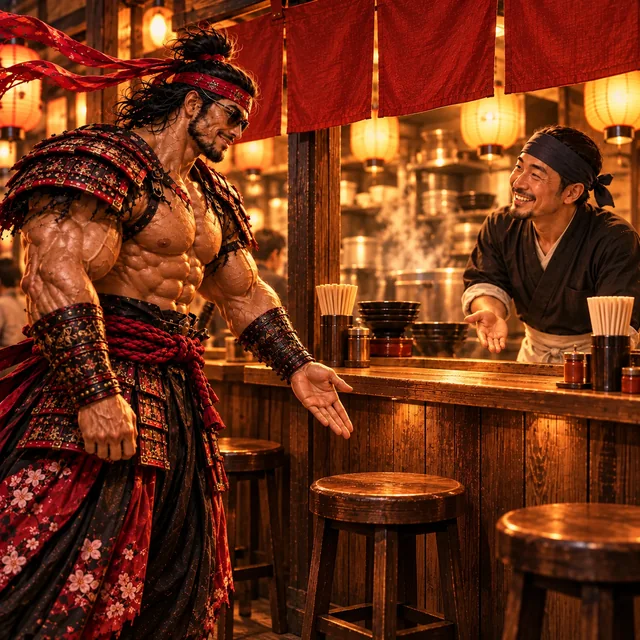
メニューを選んで注文する
メニューを頼む
The menu, please.
メニューをお願いします。
Menyū o onegai shimasu.
Useful at a shop with table or counter service. At a ticket-machine shop, the choices may be on the machine or a wall menu instead.
席で注文するお店で使えます。食券制のお店では、券売機や壁のメニューで選ぶこともあります。
In context: Choose your bowl and place an order
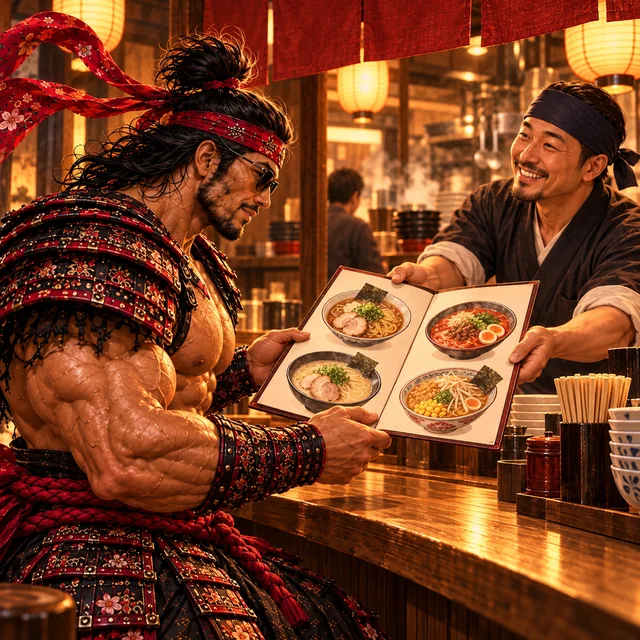
おすすめを聞く
What do you recommend?
おすすめは何ですか?
Osusume wa nan desu ka?
Ask when you would like the staff’s suggestion. At a busy shop, have a quick look at the menu first and keep the question brief.
店員のおすすめを聞きたいときに使います。混んでいるときは、先にメニューを見てから短く聞くとスムーズです。
In context: Choose your bowl and place an order
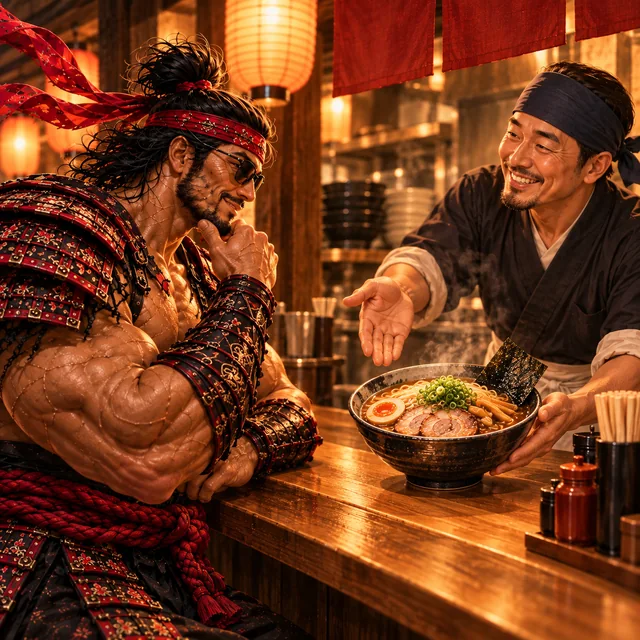
人気メニューを聞く
Which one is the most popular?
一番人気はどれですか?
Ichiban ninki wa dore desu ka?
Use this when you want the shop’s best-selling or most popular choice. Pointing to the menu helps make the question clear.
よく注文されるメニューを知りたいときに使います。メニューを見せながら聞くと伝わりやすくなります。
In context: Choose your bowl and place an order
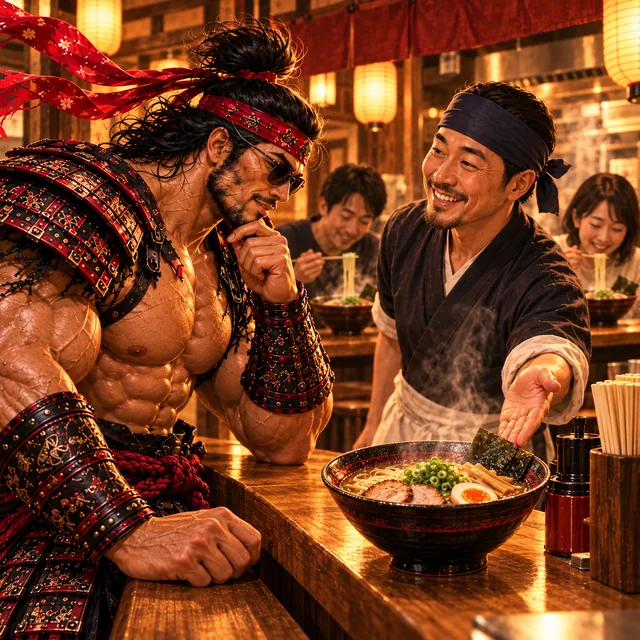
醤油ラーメンを頼む
Shoyu ramen, please.
醤油ラーメンをお願いします。
Shōyu rāmen o onegai shimasu.
Use the name shown on the menu. Shoyu refers to soy-sauce seasoning; the broth can contain other ingredients.
メニューの料理名に合わせて注文しましょう。「醤油」は味付けを表し、だしにはさまざまな材料が使われます。
In context: Choose your bowl and place an order
味噌ラーメンを頼む
Miso ramen, please.
味噌ラーメンをお願いします。
Miso rāmen o onegai shimasu.
Use this if miso ramen is on the menu. Miso is a fermented seasoning; the ingredients and toppings vary by shop.
メニューに味噌ラーメンがあるときに使います。味噌は発酵調味料で、スープの材料や具材はお店によって異なります。
In context: Choose your bowl and place an order
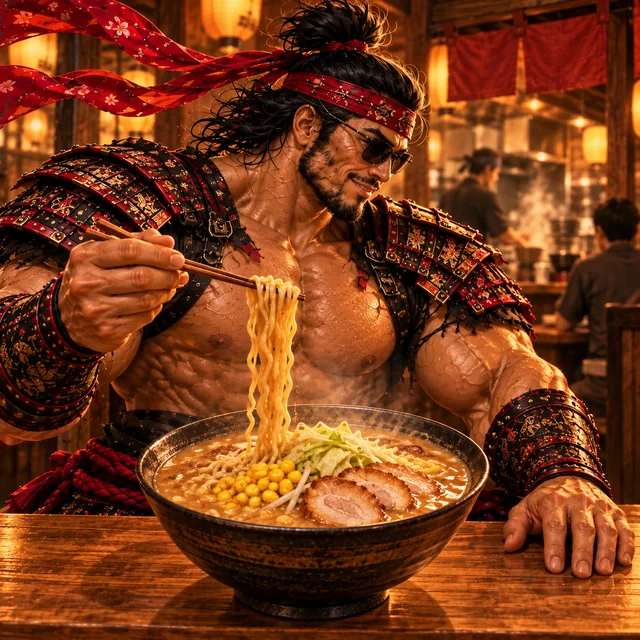
塩ラーメンを頼む
Shio ramen, please.
塩ラーメンをお願いします。
Shio rāmen o onegai shimasu.
Shio means salt and describes the seasoning style. It does not tell you everything in the broth.
「塩」は味付けの種類を表します。スープに含まれる材料すべてを表す名前ではありません。
In context: Choose your bowl and place an order
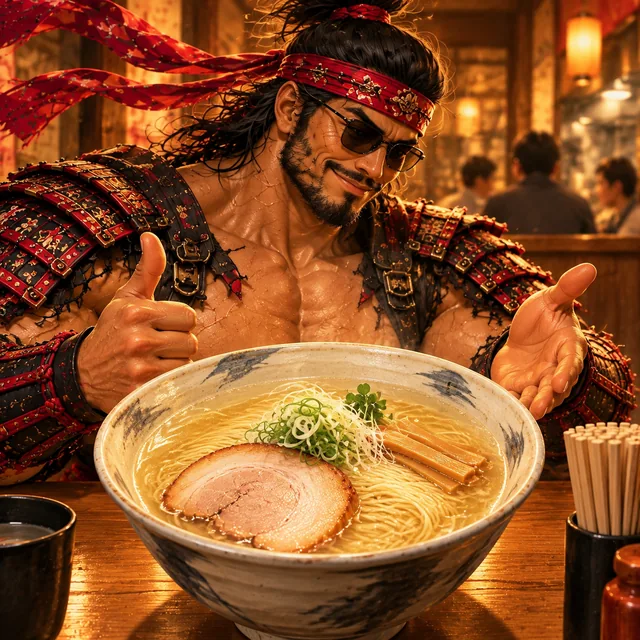
豚骨ラーメンを頼む
Tonkotsu ramen, please.
豚骨ラーメンをお願いします。
Tonkotsu rāmen o onegai shimasu.
Tonkotsu means pork-bone broth. Some menus combine broth and seasoning names, as in tonkotsu-shoyu.
「豚骨」は豚の骨で取ったスープを指します。「豚骨醤油」のように、スープの材料と味付けを組み合わせた名前もあります。
In context: Choose your bowl and place an order
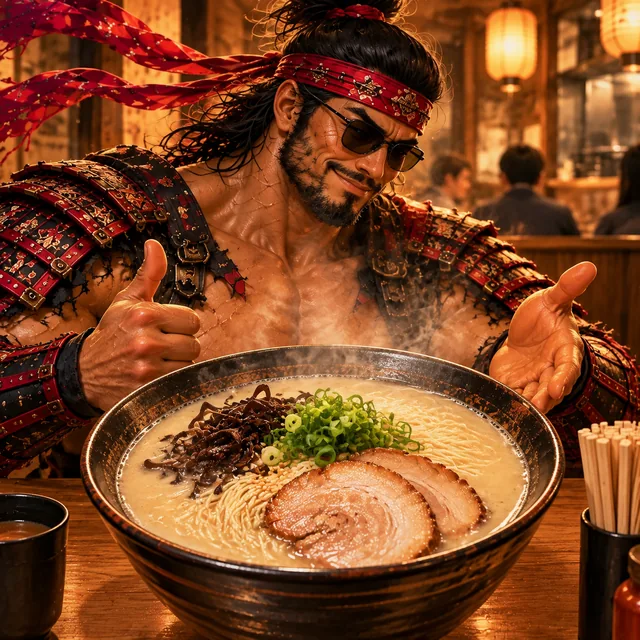
指さして注文
This one, please.
これをお願いします。
Kore o onegai shimasu.
Point to the dish or photo you want. This is a useful option when you cannot read the menu item’s name.
食べたい料理や写真を指さして使います。料理名が読めなくても注文しやすい表現です。
In context: Choose your bowl and place an order
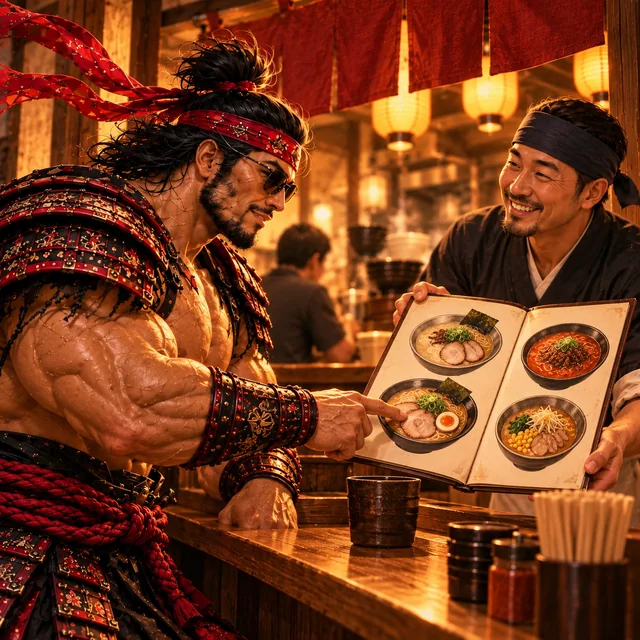
量と麺の好みを伝える
大盛りにする
A large portion, please.
大盛りでお願いします。
Ōmori de onegai shimasu.
Say this when ordering, if a large size is offered. In a ramen shop it often means more noodles; the amount and price depend on the menu.
大盛りが選べるお店で、注文時に伝えます。麺が増えることが多く、量や料金はメニューを確認しましょう。
In context: Answer noodle and portion questions
替え玉を頼む
Another serving of noodles, please.
替え玉をお願いします。
Kaedama o onegai shimasu.
At a shop that offers kaedama, you get more noodles to add to the broth left in your bowl. Keep some broth and order before you finish it. Kaedama is not a new bowl of ramen.
替え玉のあるお店では、残っているスープに入れる麺を追加できます。スープを残して注文しましょう。新しいラーメン一杯を頼む表現ではありません。
Sources: ICHIRAN official ramen guide
In context: Eat, get water and ask about refills
麺を硬めにする
Firmer noodles, please.
麺は硬めでお願いします。
Men wa katame de onegai shimasu.
Say this before the noodles are cooked, if the shop offers firmness choices. Follow the wording and options on its menu.
麺の硬さを選べるお店で、ゆで始める前に伝えます。メニューや店員の案内にある選択肢に合わせましょう。
In context: Answer noodle and portion questions
麺を柔らかめにする
Softer noodles, please.
麺は柔らかめでお願いします。
Men wa yawarakame de onegai shimasu.
Use this before cooking when the shop lets you choose the texture. You may also see やわらかめ written in hiragana.
麺の硬さを選べるお店で、調理前に伝えます。メニューでは「やわらかめ」とひらがなで書かれることもあります。
In context: Answer noodle and portion questions
ニンニクやトッピングを頼む
ニンニクを入れる
Please add garlic.
ニンニクを入れてください。
Ninniku o irete kudasai.
Use this when garlic is an available option. At a Jiro-style shop, wait for the staff’s topping question; ニンニクお願いします is also a straightforward reply.
ニンニクを追加できるときに使います。二郎系のお店では、トッピングを聞かれたタイミングで伝えましょう。「ニンニクお願いします」でも伝わります。
In context: Respond to the topping call
ニンニクを少なめにする
Just a little garlic, please.
ニンニク少なめでお願いします。
Ninniku sukuname de onegai shimasu.
Ask for a smaller amount of the garlic topping. This still asks for some garlic and does not mean the dish is garlic-free.
トッピングのニンニクを少なくしたいときに使います。ニンニクは少量入ります。料理全体からニンニクを除く意味ではありません。
In context: Respond to the topping call
ニンニクを多めにする
Extra garlic, please.
ニンニク多めでお願いします。
Ninniku ōme de onegai shimasu.
Use this if the shop allows extra garlic. The amount and any extra charge depend on the shop; Jiro-style call words may differ.
ニンニクを増やせるお店で使います。増える量や追加料金はお店によって異なり、二郎系では別のコールを使う場合もあります。
In context: Respond to the topping call
辛さを増やす
Can you make it spicier?
辛さを増やせますか?
Karasa o fuyasemasu ka?
This asks about more spicy heat, such as chili. Use it before ordering or cooking, and check which heat levels are available. For the Jiro-style meaning of カラメ, see phrase 26.
唐辛子などの辛さを増やせるか聞く表現です。注文時や調理前に、選べる辛さを確認しましょう。二郎系の「カラメ」については26番を参照してください。
In context: Respond to the topping call
味玉を追加する
An extra seasoned egg, please.
味玉を追加でお願いします。
Ajitama o tsuika de onegai shimasu.
Use this when 味玉 is listed as a topping. If the menu uses a different egg name, point to it or use that name. Egg toppings are not always soft-boiled.
トッピングに「味玉」があるときに使います。別の名前で載っている場合は、その名前で頼むか指さしましょう。卵のゆで加減はお店によって異なります。
In context: Respond to the topping call
チャーシューを追加する
Extra chashu, please.
チャーシューを追加でお願いします。
Chāshū o tsuika de onegai shimasu.
Chashu is a meat topping, usually pork. Preparation varies: it may be braised, roasted, or prepared another way. Check the menu for the serving size and price.
チャーシューは、主に豚肉を使う具材です。煮る、焼くなど調理法はさまざま。追加の枚数や料金はメニューで確認しましょう。
Sources: IPPUDO official description of braised chashu · IPPUDO official description of roasted chashu
In context: Respond to the topping call
食事中と食後
水を頼む
Some water, please.
お水をお願いします。
Omizu o onegai shimasu.
Ask if you need water and it is not self-service. Look for a water dispenser or pitcher first.
セルフサービスでない場合に、水を頼む表現です。給水機やピッチャーがあるか、先に確認しましょう。
In context: Eat, get water and ask about refills
食べる前のあいさつ
Thank you for the food. (Said before eating.)
いただきます。
Itadakimasu.
A short expression of gratitude before you begin. You can say it quietly to yourself; you do not need to wait for a reply.
食べ始める前に、感謝を込めて言うあいさつです。小さな声で言ってもよく、返事を待つ必要はありません。
In context: Eat, get water and ask about refills
食後のお礼
Thank you for the meal.
ごちそうさまでした。
Gochisōsama deshita.
Say this after eating or as you leave. A nod toward the staff makes a warm, simple goodbye.
食べ終わったときや、お店を出るときに使います。店員に軽く会釈しながら伝えると丁寧です。
In context: Eat, get water and ask about refills · Pay, get a receipt and leave
二郎系で使う特別フレーズ
二郎系の特別フレーズ
Extra-extra vegetables, garlic, and stronger seasoning, please.
ヤサイマシマシニンニクカラメでお願いします。
Yasai mashimashi ninniku karame de onegai shimasu.
Use this only at a shop that offers these call options, when the staff asks for your toppings. マシマシ applies to the vegetables in this phrase. ニンニク asks for garlic; カラメ asks for stronger, saltier seasoning, usually extra tare. Check the shop’s instructions before using it.
このコールに対応しているお店で、トッピングを聞かれたときに使います。このフレーズの「マシマシ」は野菜にかかります。「ニンニク」はニンニクを入れる指定、「カラメ」は主にたれを増やして味を濃くする指定です。お店の案内を確認してから使いましょう。
Sources: Butayama official ordering guide · Butayama official explanation of the topping call · Ramen Taro official topping guide
In context: Respond to the topping call
Break it into chunks: ヤサイマシマシ / ニンニク / カラメ / でお願いします。 Say it calmly; speed is not the goal.
「ヤサイマシマシ/ニンニク/カラメ/でお願いします」と区切ると覚えやすくなります。早口で言う必要はありません。
You may hear ニンニク入れますか? (Ninniku iremasu ka?), literally “Would you like garlic?” At a shop using this call system, that question is your cue to give the topping choices it offers.
「ニンニク入れますか?」と聞かれたら、そのお店で選べるトッピングを伝えるタイミングです。
Check the shop’s own rules. Call words, quantities, charges, and whether マシマシ is available vary. Butayama’s official guide is one example, not a universal rulebook.
コールの言い方、量、料金、マシマシに対応しているかどうかは、お店によって異なります。豚山の公式案内も一例で、すべてのお店に共通するルールではありません。
For a first visit, look at the portion sizes before adding extras. You can simply use the options you understand and want; the full special phrase is optional.
初めてのお店では、増量する前に量を確認しましょう。自分が分かる言い方で、必要なものだけ頼めば大丈夫です。特別フレーズを全部言う必要はありません。
Where is the queue?
列はどこですか?
Retsu wa doko desu ka?
Ask before joining a group or blocking the entrance. A ticket queue and a seating queue may be different.
Do not assume the ticket machine is the first stop. Follow the signs and staff.
In context: Arrive, queue and find a seat
Should I buy a meal ticket first?
先に食券を買えばいいですか?
Saki ni shokken o kaeba ii desu ka?
Ask whether to buy before joining the seating queue.
Saki ni means first. A shop may ask you to wait before buying.
In context: Arrive, queue and find a seat · Buy and hand over a meal ticket
May I sit here?
ここに座ってもいいですか?
Koko ni suwatte mo ii desu ka?
Point to the seat and wait for permission.
An empty seat may be reserved for the next person in line.
In context: Arrive, queue and find a seat
Separate seats are fine.
別々の席でも大丈夫です。
Betsubetsu no seki demo daijōbu desu.
Answer only when your group is happy to sit separately.
Daijōbu here accepts the offered arrangement; a bare daijōbu can be ambiguous in other situations.
In context: Arrive, queue and find a seat
There are three of us.
三人です。
Sannin desu.
Tell staff your party size when asked.
Teaching phrase. Availability, fees and procedures depend on the actual shop.
In context: Arrive, queue and find a seat
There are four of us.
四人です。
Yonin desu.
Staff may not be able to seat the whole group together.
Teaching phrase. Availability, fees and procedures depend on the actual shop.
In context: Arrive, queue and find a seat
Do I need a numbered ticket?
整理券は必要ですか?
Seiriken wa hitsuyō desu ka?
Ask before joining an unfamiliar queue.
Teaching phrase. Availability, fees and procedures depend on the actual shop.
In context: Arrive, queue and find a seat
Should I write my name down?
名前を書いたほうがいいですか?
Namae o kaita hō ga ii desu ka?
Follow the shop’s waiting-list procedure.
Teaching phrase. Availability, fees and procedures depend on the actual shop.
In context: Arrive, queue and find a seat
I do not have a reservation.
予約していません。
Yoyaku shite imasen.
This does not establish that walk-ins are accepted.
Teaching phrase. Availability, fees and procedures depend on the actual shop.
In context: Arrive, queue and find a seat
Can we come in now?
今、入れますか?
Ima, hairemasu ka?
Ask at the entrance; an empty seat may already be assigned.
Teaching phrase. Availability, fees and procedures depend on the actual shop.
In context: Arrive, queue and find a seat
Please show me how to use the ticket machine.
券売機の使い方を教えてください。
Kenbaiki no tsukaikata o oshiete kudasai.
Ask staff when you cannot find a payment or menu control.
Physical buttons, touchscreens and accepted payment methods differ.
In context: Buy and hand over a meal ticket
Can you change this into smaller notes or coins?
両替できますか?
Ryōgae dekimasu ka?
Show the banknote you want to change. Staff may be unable to help.
Ryōgae means changing money denominations here, not a food refund or currency exchange service.
In context: Buy and hand over a meal ticket
Is this sold out?
これは売り切れですか?
Kore wa urikire desu ka?
Point at the menu button or item.
売切 and 売り切れ mean sold out. Do not assume an unlit button is available.
In context: Buy and hand over a meal ticket
Where does the change come out?
お釣りはどこから出ますか?
Otsuri wa doko kara demasu ka?
Ask after a purchase if you cannot find the return slot.
Change and the meal ticket may come out in different places; some machines require a return button.
In context: Buy and hand over a meal ticket
Should I hand in my meal ticket here?
食券はこちらでいいですか?
Shokken wa kochira de ii desu ka?
Hold the ticket where staff can see it.
A meal ticket is not the same as a receipt. Some shops collect it at the queue; others at your seat.
In context: Buy and hand over a meal ticket
Is there an extra charge?
追加料金はかかりますか?
Tsuika ryōkin wa kakarimasu ka?
Ask before accepting an extra topping, size change or refill.
Extra noodles, toppings and soup services may have separate prices or tickets.
In context: Buy and hand over a meal ticket · Answer noodle and portion questions
Could you change this money?
両替をお願いできますか?
Ryōgae o onegai dekimasu ka?
Show the note and ask staff; not every shop can make change.
Teaching phrase. Availability, fees and procedures depend on the actual shop.
In context: Buy and hand over a meal ticket
Can I use electronic money?
電子マネーは使えますか?
Denshi manē wa tsukaemasu ka?
Accepted payment systems vary by machine and branch.
Teaching phrase. Availability, fees and procedures depend on the actual shop.
In context: Buy and hand over a meal ticket
Can I pay contactlessly?
タッチ決済はできますか?
Tacchi kessai wa dekimasu ka?
Confirm the actual card or device you intend to use.
Teaching phrase. Availability, fees and procedures depend on the actual shop.
In context: Buy and hand over a meal ticket
Is it sold out?
売り切れですか?
Urikire desu ka?
Point to the item rather than assuming that every dark button means the same thing.
Teaching phrase. Availability, fees and procedures depend on the actual shop.
In context: Buy and hand over a meal ticket
I bought the wrong meal ticket.
間違った食券を買ってしまいました。
Machigatta shokken o katte shimaimashita.
Ask staff before buying another ticket or requesting a refund.
Teaching phrase. Availability, fees and procedures depend on the actual shop.
In context: Buy and hand over a meal ticket
May I place my order?
注文してもいいですか?
Chūmon shite mo ii desu ka?
Use when staff take spoken orders and you are ready.
A ticket or order-sheet shop may ask you to use its own ordering system instead.
In context: Choose your bowl and place an order
Tsukemen, please.
つけ麺をお願いします。
Tsukemen o onegai shimasu.
Use when dipping noodles are on the menu.
The noodles and dipping soup are usually served separately; this is not a request for a noodle refill.
In context: Choose your bowl and place an order
Do you use pork, pork bones or lard?
豚肉、豚骨、ラードは使っていますか?
Butaniku, tonkotsu, rādo wa tsukatte imasu ka?
Removing chashu does not remove pork already in broth, tare or oil. This question does not certify halal or allergen safety.
Ask before buying; point to the specific dish and ask about broth as well as toppings.
Removing chashu does not remove pork already in broth, tare or oil. This question does not certify halal or allergen safety.
In context: Choose your bowl and place an order
I have an egg allergy.
卵アレルギーがあります。
Tamago arerugī ga arimasu.
This is an egg example, not a template that silently covers all allergies. A translation is not a safety guarantee.
Use only if you actually have an egg allergy. Show your own specific allergen information before ordering.
This is an egg example, not a template that silently covers all allergies. A translation is not a safety guarantee.
In context: Choose your bowl and place an order
Does this dish contain egg?
この料理には卵が入っていますか?
Kono ryōri ni wa tamago ga haitte imasu ka?
An ingredient answer does not settle cross-contact or every component. Do not rely on a photo or dish name.
Point to the whole dish; check noodles, broth, toppings and preparation with staff.
An ingredient answer does not settle cross-contact or every component. Do not rely on a photo or dish name.
In context: Choose your bowl and place an order
If you cannot confirm, I will not order.
確認できなければ、注文はやめておきます。
Kakunin dekinakereba, chūmon wa yamete okimasu.
An unclear answer is not permission to assume a dish is suitable. This course does not assess medical risk.
Use when staff cannot confirm information you need to make your own decision.
An unclear answer is not permission to assume a dish is suitable. This course does not assess medical risk.
In context: Choose your bowl and place an order
Is it possible to leave out the egg?
卵を抜くことはできますか?
Tamago o nuku koto wa dekimasu ka?
Ask before ordering only as a preparation question; distinguish an allergy from a preference.
Removing an egg topping cannot remove egg in noodles or cross-contact. A yes does not establish allergen safety.
In context: Choose your bowl and place an order
Which ramen is lighter in flavor?
あっさりしたラーメンはどれですか?
Assari shita rāmen wa dore desu ka?
This asks about taste, not calories or dietary suitability.
Teaching phrase. Availability, fees and procedures depend on the actual shop.
In context: Choose your bowl and place an order
Which ramen has a rich flavor?
濃厚なラーメンはどれですか?
Nōkō na rāmen wa dore desu ka?
Richness can describe the stock or its texture, not just seasoning.
Teaching phrase. Availability, fees and procedures depend on the actual shop.
In context: Choose your bowl and place an order
Do you have a seafood-based soup?
魚介のスープはありますか?
Gyokai no sūpu wa arimasu ka?
A seafood-led soup may also contain meat or other ingredients.
Teaching phrase. Availability, fees and procedures depend on the actual shop.
In context: Choose your bowl and place an order
Do you have a chicken-based soup?
鶏のスープはありますか?
Tori no sūpu wa arimasu ka?
Ask about the actual dish if other ingredients matter.
Teaching phrase. Availability, fees and procedures depend on the actual shop.
In context: Choose your bowl and place an order
What comes with this set?
このセットには何が付きますか?
Kono setto ni wa nani ga tsukimasu ka?
Check both the included items and total price before paying.
Teaching phrase. Availability, fees and procedures depend on the actual shop.
In context: Choose your bowl and place an order
A regular portion, please.
普通の量でお願いします。
Futsū no ryō de onegai shimasu.
Answer a question about noodle quantity or portion size.
Regular is relative to this shop, not a guaranteed number of grams.
In context: Answer noodle and portion questions
Could you use fewer noodles?
麺を少なめにできますか?
Men o sukuname ni dekimasu ka?
Ask before cooking, if the shop accepts portion requests.
Less does not necessarily mean a lower price. Some ticket sizes cannot be changed.
In context: Answer noodle and portion questions
Regular noodle firmness, please.
普通の硬さでお願いします。
Futsū no katasa de onegai shimasu.
Answer when the staff ask about noodle firmness.
Katasa is firmness; karasa is chili heat. Firmness choices are not offered everywhere.
In context: Answer noodle and portion questions
Please tell me the noodle portion size.
麺の量を教えてください。
Men no ryō o oshiete kudasai.
Ask before choosing a larger serving.
Teaching phrase. Availability, fees and procedures depend on the actual shop.
In context: Answer noodle and portion questions
Slightly softer noodles, please.
少し柔らかめでお願いします。
Sukoshi yawarakame de onegai shimasu.
Use this when staff offer a noodle-firmness choice.
Teaching phrase. Availability, fees and procedures depend on the actual shop.
In context: Answer noodle and portion questions
Could you use less added oil?
油を少なめにできますか?
Abura o sukuname ni dekimasu ka?
This is a preparation request, not a guarantee about the whole dish.
Teaching phrase. Availability, fees and procedures depend on the actual shop.
In context: Answer noodle and portion questions
Could you make the seasoning lighter?
味を薄めにできますか?
Aji o usume ni dekimasu ka?
Ask before cooking; adjustment may not be available.
Teaching phrase. Availability, fees and procedures depend on the actual shop.
In context: Answer noodle and portion questions
Could I have the noodles warm?
温かい麺にできますか?
Atatakai men ni dekimasu ka?
Useful for tsukemen where a warm-noodle option may be offered.
Teaching phrase. Availability, fees and procedures depend on the actual shop.
In context: Answer noodle and portion questions
Could you say that again, please?
もう一度お願いします。
Mō ichido onegai shimasu.
Use immediately when you miss a question.
A short repeat request is more useful than guessing a topping choice.
In context: Recover when you miss a question
Could you speak more slowly?
ゆっくり話していただけますか?
Yukkuri hanashite itadakemasu ka?
Ask politely when the repeated question is still too fast.
Listen and point at the offered choices; the staff may not speak English.
In context: Recover when you miss a question
I only understand a little Japanese.
日本語は少ししかわかりません。
Nihongo wa sukoshi shika wakarimasen.
Use at the start of a difficult exchange.
This explains a language difficulty, not a request for an English-speaking staff member.
In context: Recover when you miss a question
What does that mean?
どういう意味ですか?
Dō iu imi desu ka?
Point at the word or repeat the unfamiliar term.
For a menu item, asking about ingredients is more specific than asking only for its translation.
In context: Recover when you miss a question
That is everything for my order.
注文はこれで全部です。
Chūmon wa kore de zenbu desu.
Use after checking the items you actually want.
Teaching phrase. Availability, fees and procedures depend on the actual shop.
In context: Recover when you miss a question
I am learning Japanese.
日本語を勉強しています。
Nihongo o benkyō shite imasu.
A friendly introduction; staff may still be busy.
Teaching phrase. Availability, fees and procedures depend on the actual shop.
In context: Recover when you miss a question
Could you tell me what it means?
意味を教えていただけますか?
Imi o oshiete itadakemasu ka?
Point to the particular word or item.
Teaching phrase. Availability, fees and procedures depend on the actual shop.
In context: Recover when you miss a question
May I point to the photograph?
写真を指してもいいですか?
Shashin o sashite mo ii desu ka?
A menu photo can help you communicate an order.
Teaching phrase. Availability, fees and procedures depend on the actual shop.
In context: Recover when you miss a question
No added garlic, please.
ニンニク抜きでお願いします。
Ninniku nuki de onegai shimasu.
Nuki requests omission of the added ingredient; it does not establish that the broth or kitchen is garlic-free.
Use at the shop’s garlic question or before cooking when requests are accepted.
Nuki requests omission of the added ingredient; it does not establish that the broth or kitchen is garlic-free.
In context: Respond to the topping call
Please do not make it spicy.
辛くしないでください。
Karaku shinaide kudasai.
This request may be impossible for a pre-made spicy broth. Karame at a Jiro-style call usually concerns seasoning, not chili.
Use before ordering a dish with adjustable chili heat.
This request may be impossible for a pre-made spicy broth. Karame at a Jiro-style call usually concerns seasoning, not chili.
In context: Answer noodle and portion questions · Respond to the topping call
Could I add one seasoned egg?
味玉を一つ追加できますか?
Ajitama o hitotsu tsuika dekimasu ka?
Confirm the additional price and whether your bowl already includes one.
Teaching phrase. Availability, fees and procedures depend on the actual shop.
In context: Respond to the topping call
Could you leave off the green onions?
ねぎ抜きにできますか?
Negi nuki ni dekimasu ka?
An omission request does not establish an allergen-free dish.
Teaching phrase. Availability, fees and procedures depend on the actual shop.
In context: Respond to the topping call
Could I add extra nori?
海苔を追加できますか?
Nori o tsuika dekimasu ka?
Ask about availability and price.
Teaching phrase. Availability, fees and procedures depend on the actual shop.
In context: Respond to the topping call
Can I add toppings later?
トッピングは後から追加できますか?
Toppingu wa ato kara tsuika dekimasu ka?
Some shops require extras to be ordered at the machine first.
Teaching phrase. Availability, fees and procedures depend on the actual shop.
In context: Respond to the topping call
Just a little garlic, please.
ニンニクは少しだけお願いします。
Ninniku wa sukoshi dake onegai shimasu.
Reply when staff ask about added garlic.
Teaching phrase. Availability, fees and procedures depend on the actual shop.
In context: Respond to the topping call
Could I have broth to dilute the dipping soup?
スープ割りをお願いします。
Sūpu-wari o onegai shimasu.
Ask after finishing tsukemen noodles, if soup-wari is offered.
This is not a new bowl of ramen or a kaedama refill. Some shops provide a self-service pot; others do not offer it.
In context: Eat, get water and ask about refills
Do I need a meal ticket for a noodle refill?
替え玉は食券を買いますか?
Kaedama wa shokken o kaimasu ka?
Ask before requesting kaedama when the ordering/payment method is unclear.
Kaedama means extra noodles for your remaining broth, not a fresh bowl. Availability and timing vary.
In context: Eat, get water and ask about refills
Do you have a paper apron?
紙エプロンはありますか?
Kami epuron wa arimasu ka?
Useful for a splash-prone bowl or while wearing light clothes.
Availability is not guaranteed; do not reach behind the counter.
In context: Eat, get water and ask about refills
Where is the restroom?
お手洗いはどこですか?
Otearai wa doko desu ka?
Ask before leaving your seat or going through a staff-only door.
The restroom may be outside the shop or unavailable to customers.
In context: Eat, get water and ask about refills
Do you have an apron?
エプロンはありますか?
Epuron wa arimasu ka?
Useful for splashes; it may be self-service.
Teaching phrase. Availability, fees and procedures depend on the actual shop.
In context: Eat, get water and ask about refills
Where are the tissues?
ティッシュはどこですか?
Tisshu wa doko desu ka?
Look for a shared box or dispenser first.
Teaching phrase. Availability, fees and procedures depend on the actual shop.
In context: Eat, get water and ask about refills
Could I have more water?
お水のおかわりをいただけますか?
Omizu no okawari o itadakemasu ka?
Staff may direct you to a self-service dispenser.
Teaching phrase. Availability, fees and procedures depend on the actual shop.
In context: Eat, get water and ask about refills
Do you have a bowl for a child?
子ども用の器はありますか?
Kodomo-yō no utsuwa wa arimasu ka?
This does not establish that bowl sharing is permitted.
Teaching phrase. Availability, fees and procedures depend on the actual shop.
In context: Eat, get water and ask about refills
May I take a photograph?
写真を撮ってもいいですか?
Shashin o totte mo ii desu ka?
Ask before photographing; avoid other guests and busy staff.
Teaching phrase. Availability, fees and procedures depend on the actual shop.
In context: Eat, get water and ask about refills
It was really delicious.
とてもおいしかったです。
Totemo oishikatta desu.
A warm compliment after the meal.
Teaching phrase. Availability, fees and procedures depend on the actual shop.
In context: Eat, get water and ask about refills
The bill, please.
お会計をお願いします。
Okaikei o onegai shimasu.
Use at a pay-after-eating shop when ready to leave.
If you already paid for a meal ticket, do not request a second payment unless you owe for extras.
In context: Pay, get a receipt and leave
Can I pay by card?
カードは使えますか?
Kādo wa tsukaemasu ka?
Ask before committing to an order if you need card payment.
Accepted cards, cashless methods and machine payment options differ by shop.
In context: Buy and hand over a meal ticket · Pay, get a receipt and leave
A receipt, please.
レシートをお願いします。
Reshīto o onegai shimasu.
Ask when paying or when you need proof of a ticket purchase.
A meal ticket is not necessarily a receipt; receipt printing may be a separate machine function.
In context: Pay, get a receipt and leave
I have already paid.
支払いは済んでいます。
Shiharai wa sunde imasu.
Say this only if true; show the ticket or payment evidence if staff need to check.
This does not cover an unpaid extra topping or refill. Resolve discrepancies with staff.
In context: Pay, get a receipt and leave
Do I pay here?
ここで支払いますか?
Koko de shiharaimasu ka?
Use if the payment location is unclear.
Teaching phrase. Availability, fees and procedures depend on the actual shop.
In context: Pay, get a receipt and leave
How much are the extras?
追加分はいくらですか?
Tsuikabun wa ikura desu ka?
Useful when the original meal ticket did not cover later additions.
Teaching phrase. Availability, fees and procedures depend on the actual shop.
In context: Pay, get a receipt and leave
I left something behind.
忘れ物をしてしまいました。
Wasuremono o shite shimaimashita.
Tell staff what and where, without entering a restricted area.
Teaching phrase. Availability, fees and procedures depend on the actual shop.
In context: Pay, get a receipt and leave
I would love to come again.
また来たいです。
Mata kitai desu.
Teaching phrase. Availability, fees and procedures depend on the actual shop.
A friendly way to say that you enjoyed your visit.
Teaching phrase. Availability, fees and procedures depend on the actual shop.
In context: Pay, get a receipt and leave
Shop examples support the specific notes; each shop sets its own rules.
Kaedama noodles go into the broth remaining in the bowl. ICHIRAN gives its own ordering-timing advice.
The noodle-refill explanation is relevant to phrase 14. ICHIRAN’s exact timing is not presented as a rule for all shops.
Read the original source →Lists garlic, vegetables, and their quantity options; lists カラメ under 味の濃さ, flavor strength.
An official example from a Jiro-style chain, not a policy for every Ramen Jiro branch or Jiro-inspired shop.
Read the original source →Defines カラメ as adding soy-sauce tare, separately from its spicy topping.
An official Jiro-inspired shop example supporting the distinction between stronger seasoning and chili heat.
Read the original source →Explains that the staff’s topping question comes just before serving.
Used only for the described ordering practice, not the expired promotional campaign.
Read the original source →Describes chashu that is seared and slowly simmered in soy sauce.
A cooking-method example from a past menu, not a claim about present availability.
Read the original source →Describes chashu finished by smoking and hanging-roasting.
A cooking-method example from a past menu, not a claim about present availability.
Read the original source →The 74 additional phrases and conversations are independently written examples. Shop guides support specific ordering notes, not universal rules. Device speech is synthesized; textbook audio and artwork are not copied.
Supports beginner communication-repair learning. This course’s new dialogues are independently written teaching examples, not reproduced textbook scripts.
Read source →Supports learning ordering language in context. No textbook pictures or audio are copied.
Read source →Official communication aid to prepare separately for your actual allergies. Our egg examples do not replace it or certify a dish.
Read source →Specific chain example for offered topping options and stronger seasoning. Not rules for every Jiro branch.
Read source →Specific shop example explaining extra noodles in remaining broth; other shops may use different ordering/timing.
Read source →The words, examples and quizzes are independently written. Listen uses your device’s voice. Ramen shops set their own options, prices and procedures.
Butayama: menu and ordering options — A specific chain example for seasoning terminology, portions and timing. Not universal Jiro rules.
ICHIRAN: ramen and kaedama — Kaedama in remaining broth and the distinction between seasoning and broth names. No health or safety claims are reused.
IPPUDO: 2026 tsukemen announcement (ended) — Historical example distinguishing large portions, unavailable noodle refills and soup-wari. Not a current menu or availability recommendation.
Japan Foundation: Irodori — Further Japanese study. Our text, examples and quizzes are independently written; no textbook audio, artwork or exercises are copied.
Shin-Yokohama Ramen Museum: ramen dictionary — Further reading about ramen terminology; a word is not a complete ingredient list.
A short, polite request and a clear point at the menu are often all you need.
短い言葉で丁寧に伝え、必要ならメニューを指さしてみましょう。